Journal name: Taipei Business Review
Special Issue: Education Refined and Reinvented in the Age of AI
This Special Issue explores how AI-augmented ecosystems reinvent learning through human- centered collaboration, personalized pathways, and ethical governance. We invite research on the synergy between educators and AI, focusing on scalable lifelong learning, academic integrity, and inclusive excellence. By critically evaluating assessment standards and institutional readiness, this issue aims to define a sustainable framework for workforce readiness and pedagogical innovation in the evolving generative AI landscape.
Guest editors: Lichung Jen, Kun Huang Huarng, Shiow-Lin Hwu
Submission Link:https://forms.gle/3Qag9PE6aGBwUBaV9
Submission Deadline:30 October 2026
Background and Motivation
Artificial intelligence (AI) is fundamentally altering the logic of educational practice. Beyond its role in knowledge delivery, AI now directly influences how learning environments are governed, designed, and assessed. From adaptive recommendation engines to generative AI, these technological shifts have reenforced a reconsideration of institutional innovation and pedagogical standards (Wang et al., 2024). In this landscape, education is not merely being enhanced by digital technology; it is undergoing a structural reinvention to address the specific demands of the AI.
A critical dimension of this evolution is the changing nature of human-AI interaction in the classroom. AI is increasingly viewed as a functional partner that can augment instructional design and provide granular insights into learning process. This shift necessitates a rethink of the educator’s professional identity. Teachers are no longer just facilitators; they must now exercise high-level pedagogical judgment and ethical oversight in AI-mediated settings. As noted by Tan et al. (2025), while the use of AI in teaching is expanding, we still lack a deep understanding of how to effectively prepare educators for this level of responsible integration.
Concurrent with these changes is the rise of adaptive learning systems. By analyzing behavior and identifying specific knowledge gaps, AI offers a pathway toward more responsive and inclusive education, particularly in settings marked by learner diversity and unequal support. Existing research highlights AI’s capacity to refine instructional precision and create flexible learning pathways (Merino-Campos, 2025; Wang et al., 2024).
Nevertheless, the transition toward AI-augmented learning presents inherent tensions between innovation and established practice. Serious concerns regarding algorithmic bias, data privacy, and the erosion of learner autonomy have moved to the center of current academic debate. Generative AI, in particular, has disrupted long-standing assumptions about authorship and original work. Scholars now argue that a “human-centered” approach to AI should extend beyond technical performance to emphasize fairness and equity, privacy and security, agency and autonomy, and transparency and intelligibility (Fu & Weng, 2024). This directly impacts assessment practices; as AI becomes a standard tool for students, traditional evaluative models struggle to capture authentic learning. This creates an urgent need for learning-oriented assessment approaches that extend beyond traditional performance measures and better support formative evaluation, feedback, and complex learning outcomes (Memarian & Doleck, 2024).
The impact of AI also extends to institutional strategy and workforce readiness. Schools and universities are under pressure to equip students with the AI literacy required for a volatile labor market. Simultaneously, institutions must navigate complex policy landscapes. International bodies, such as UNESCO and the OECD, have stressed the need for governance frameworks that align AI innovation with human rights and educational quality (Miao & Holmes, 2023; OECD, 2025).
Although research in this area has expanded rapidly, the field remains fragmented. Much of the existing work focuses on individual tools or technical performance, with far less attention to the links among pedagogy, ethics, and leadership. There is still a need for research that looks beyond tools and considers how AI is shaping educational systems more broadly.
This special issue Education Refined and Reinvented in the Age of AI , aims to address these gaps. We invite interdisciplinary contributions that explore how AI is reshaping teaching, assessment, and institutional policy. Our goal is to move the conversation forward-from basic AI adoption toward a more thoughtful and sustainable reinvention of education.
Topics and Research Questions
Theme:Education Refined and Reinvented in the Age of AI
Sub-themes:
1. Human–AI Collaboration in Teaching and Learning
- Designing instructional models in which educators and AI systems work in complementary ways
- Redefining the role of teachers in AI-rich learning environments
- Examining how human judgment and AI support can be balanced in classroom practice
2. Personalized and Adaptive Learning with AI
- Intelligent tutoring systems, recommendation engines, and adaptive learning pathways
- Real-time feedback and data-informed instructional interventions
- Opportunities and challenges in using AI to support diverse learner needs
3. Academic Integrity, Ethical, and Inclusive Use of AI in Education
- Addressing algorithmic bias and promoting fairness in AI-supported education
- Data privacy, transparency, accountability, and responsible AI use
- Building inclusive learning environments through ethical and equitable AI practices
4. AI for Scalable Lifelong Learning and Workforce Readiness
- AI-powered platforms for upskilling, reskilling, and credentialing
- The role of AI in continuing education, professional learning, and faculty development
- Preparing learners and workers for changing skills demands in AI-enabled economies
5. Reimagining Assessment in the Age of AI
- AI-enhanced formative and summative assessment practices
- Rethinking academic integrity, authenticity, and evaluation standards
- New approaches to assessing higher-order thinking, creativity, and problem-solving
6. Learning Experience Design in AI-Augmented Environments
- Human-centered design of AI-supported learning platforms and experiences
- Multimodal learning with generative AI, VR/AR, and natural language technologies
- Designing engaging, accessible, and pedagogically sound AI-enhanced environments
7. Policy, Leadership, and Institutional Readiness for AI
- Strategic planning and capacity building for AI adoption in education
- Leadership, governance, and change management in AI-enabled institutions
- Global, regional, and cross-sector perspectives on AI policy and regulation in education
Guest editors

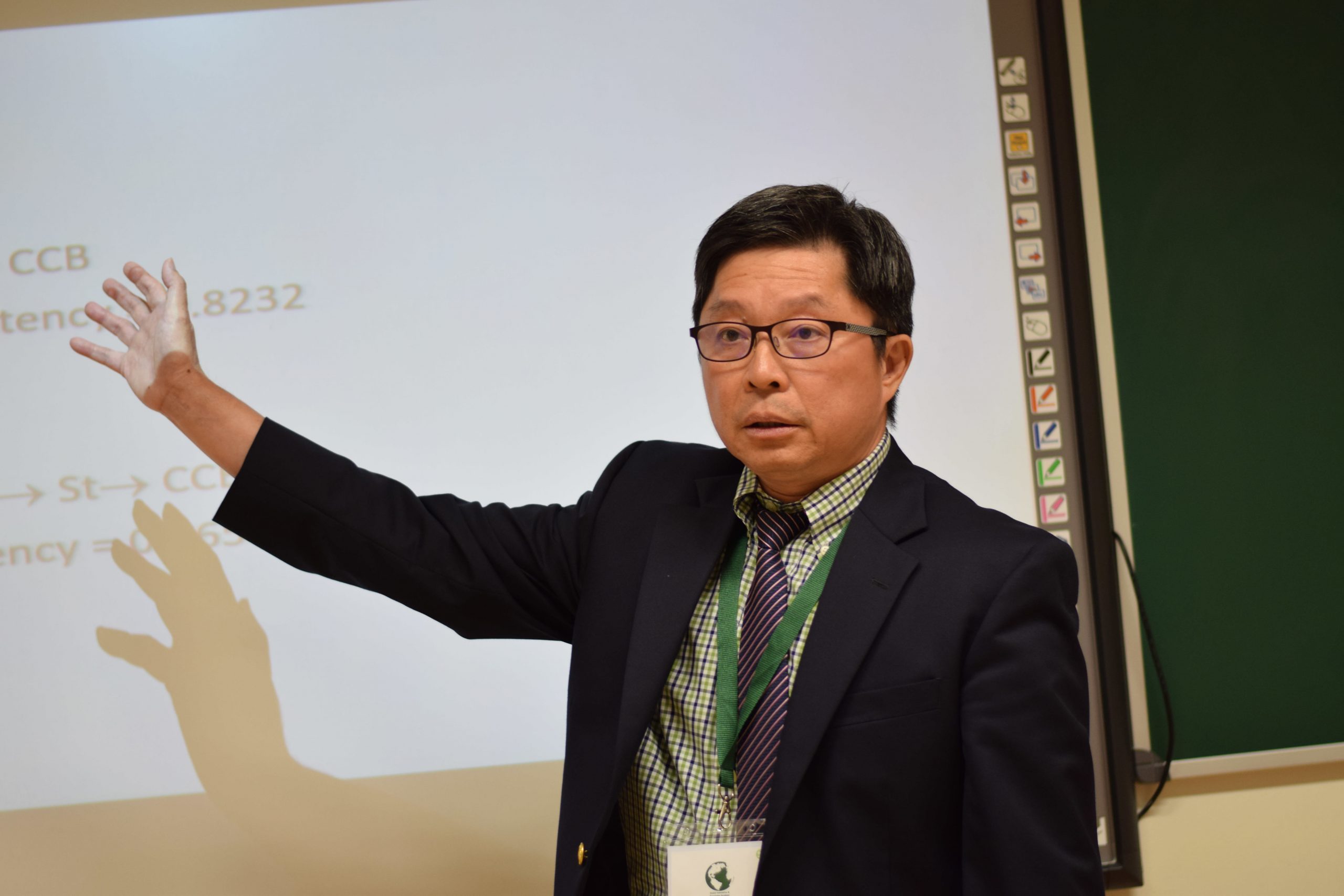
Vice President,
Distinguished Professor,
khhuarng@ntub.edu.tw

Department of Digital Multimedia Design,
Associate Professor,
slinghu@ntub.edu.tw
Submission dates
- Submission deadline: 30 October 2026
- Author’s final version Submission deadline: 30 November 2026
- First desk decision: within 15 days from submission
- Review Process: on rolling basis and no later than 2 months from submission
Publication
This Special Issue is a dedicated publication initiative stemming from the eLFA 2026 Conference. We cordially invite authors who presented their work at the conference to expand and refine their research into full manuscripts for consideration in this prestigious collection.
Journal Information
Selected and peer-reviewed papers will be published in the Taipei Business Review (Special Issue). This collaboration ensures that the innovative dialogues initiated at eLFA 2026 are preserved and disseminated within a high-quality academic framework.
Submission Requirements
1. Originality:
- Manuscripts must be significantly revised and expanded from the original conference presentation to meet the journal’s full-paper standards.
2. Compliance:
- Before submitting, all authors must strictly adhere to the formatting and ethical guidelines outlined in the [Taipei Business Review Guide for Authors].https://journal.ntub.edu.tw/
3. Peer Review:
- All submissions will undergo a rigorous double-blind peer-review process to ensure academic excellence and relevance to the theme.
In particular, authors should disclose in their manuscript the use of AI and AI-assisted technologies and a statement will appear in the published work. Declaring the use of these technologies supports transparency and trust between authors, readers, reviewers, editors, and contributors and facilitates compliance with the terms of use of the relevant tool or technology. Plagiarism in all its forms constitutes unethical behavior and is unacceptable.
References
- Bittle, K., & El-Gayar, O. (2025). Generative AI and academic integrity in higher education: A systematic review and research agenda. Information, 16(4), Article 296. https://doi.org/10.3390/info16040296
- Fu, Y., & Weng, Z. (2024). Navigating the ethical terrain of AI in education: A systematic review on framing responsible human-centered AI practices. Computers and Education: Artificial Intelligence, 7, Article 100306. https://doi.org/10.1016/j.caeai.2024.100306
- Memarian, B., & Doleck, T. (2024). A review of assessment for learning with artificial intelligence. Computers in Human Behavior: Artificial Humans, 2(2), Article 100040. https://doi.org/10.1016/j.chbah.2023.100040
- Merino-Campos, C. (2025). The impact of artificial intelligence on personalized learning in higher education: A systematic review. Trends in Higher Education, 4(2), Article 17. https://doi.org/10.3390/higheredu4020017
- Miao, F., & Holmes, W. (2023). Guidance for generative AI in education and research. UNESCO.
- OECD. (2025). AI adoption in the education system: International insights and policy considerations for Italy (OECD Artificial Intelligence Papers No. 52). OECD Publishing; Fondazione Agnelli. https://doi.org/10.1787/69bd0a4a-en
- Tan, X., Cheng, G., & Ling, M. H. A. (2025). Artificial intelligence in teaching and teacher professional development: A systematic review. Computers and Education: Artificial Intelligence, 8, Article 100355. https://doi.org/10.1016/j.caeai.2024.100355
- Wang, S., Wang, F., Zhu, Z., Wang, J., Tran, T., & Du, Z. (2024). Artificial intelligence in education: A systematic literature review. Expert Systems with Applications, 252, Article 124167. https://doi.org/10.1016/j.eswa.2024.124167